
Bangkok, Thailand
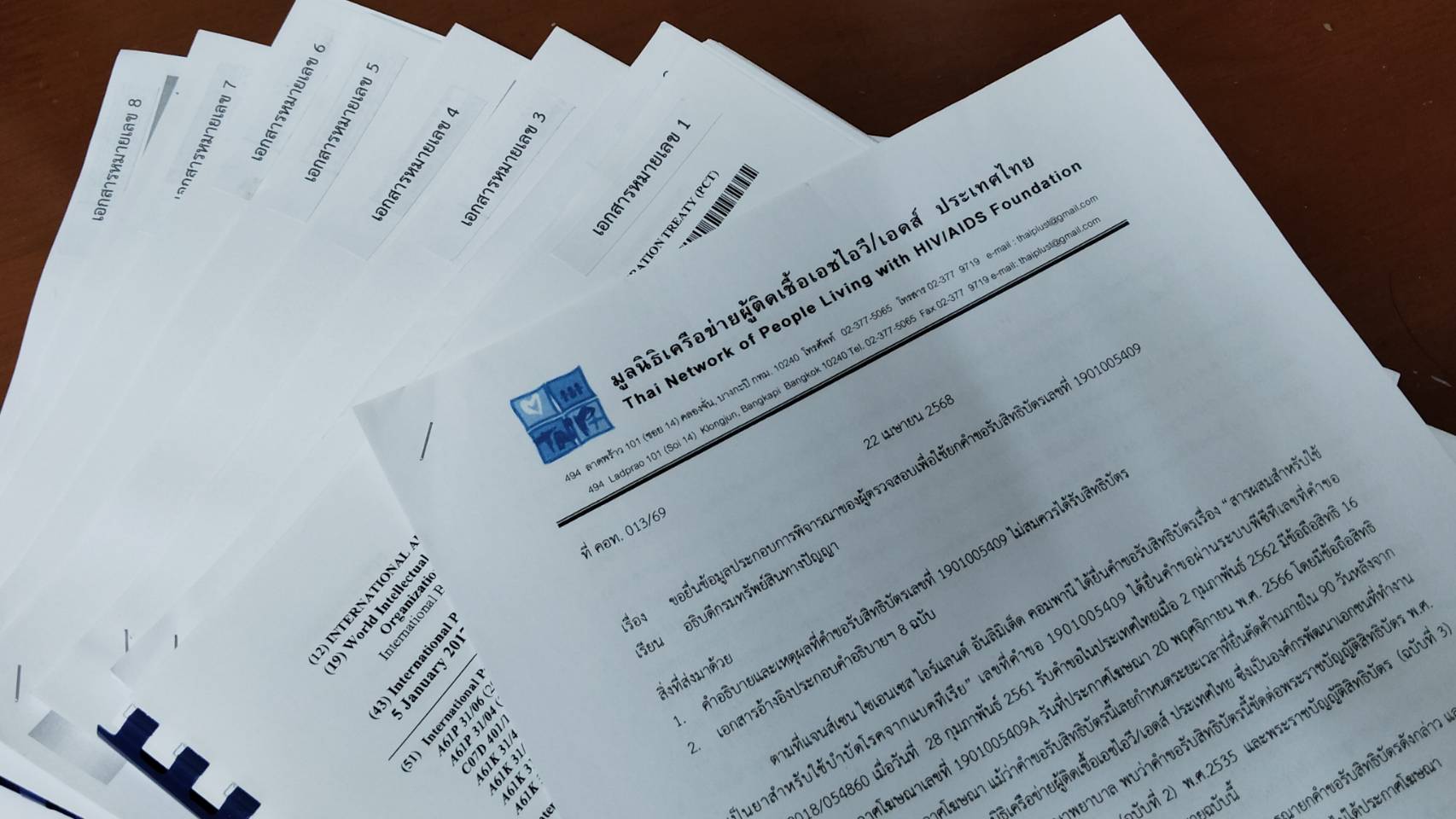
On April 22, 2026, the Thai Network of People Living with HIV/AIDS (TNP+) filed a patent opposition against a patent application submitted by Janssen Sciences Ireland UC, warning that the application represents an attempt to extend monopoly control over tuberculosis (TB) treatment through evergreening of existing medicines.
The patent application relates to combination therapies for tuberculosis, focusing on the use of pyrazinamide (PZA), a long-established first-line TB medicine, together with cytochrome bc1 inhibitors, particularly Q203 (telacebec), a newer investigational drug. It further seeks to extend protection to combinations of these medicines with other anti-TB drugs, including bedaquiline, clofazimine, and rifampicin.
Through these claims, the application attempts to cover a broad range of treatment regimens combining new and existing TB medicines, including those already used as part of standard clinical practice.
TNP+ has long worked to challenge unmerited pharmaceutical patents and expand access to essential medicines in Thailand. In recent years, together with civil society partners, it has successfully opposed multiple patent applications on bedaquiline filed by Johnson & Johnson (J&J), removing patent barriers and enabling access to affordable generic versions. This has reduced treatment costs and allowed bedaquiline to be provided free of charge under Thailand’s Universal Health Coverage (UHC), demonstrating how patent oppositions can directly expand access to life-saving medicines.
However, TNP+ considers that this application represents an attempt to extend monopoly protection through “evergreening,” as it does not constitute a genuine innovation but instead combines existing medicines to seek additional patent protection.
The organization also raised concerns that the claims are overly broad and unclear. For example, the application seeks protection over “cytochrome bc1 inhibitors,” which refers to a mechanism of action rather than clearly defined chemical structures, and could potentially cover a wide range of substances sharing this function.

“If granted, this patent could have serious implications for access to tuberculosis (TB) treatment, particularly as it claims combinations that include bedaquiline—a key backbone of multidrug-resistant TB (MDR-TB) treatment recommended by the World Health Organization. Although bedaquiline in tablet form is no longer under patent in Thailand, granting patents on such combinations could effectively re-establish monopoly control over its use and restrict access to improved treatment regimens. This could ultimately undermine efforts to scale up effective TB treatment in Thailand,” said Chalermsak Kittitrakul, Project Manager for Access to Medicines at TNP+.
TNP+ emphasized that the application fails to meet key patentability criteria under Thai law, including novelty, inventive step, and clarity, as it relies on existing scientific knowledge and standard treatment practices while claiming overly broad and ambiguous subject matter.
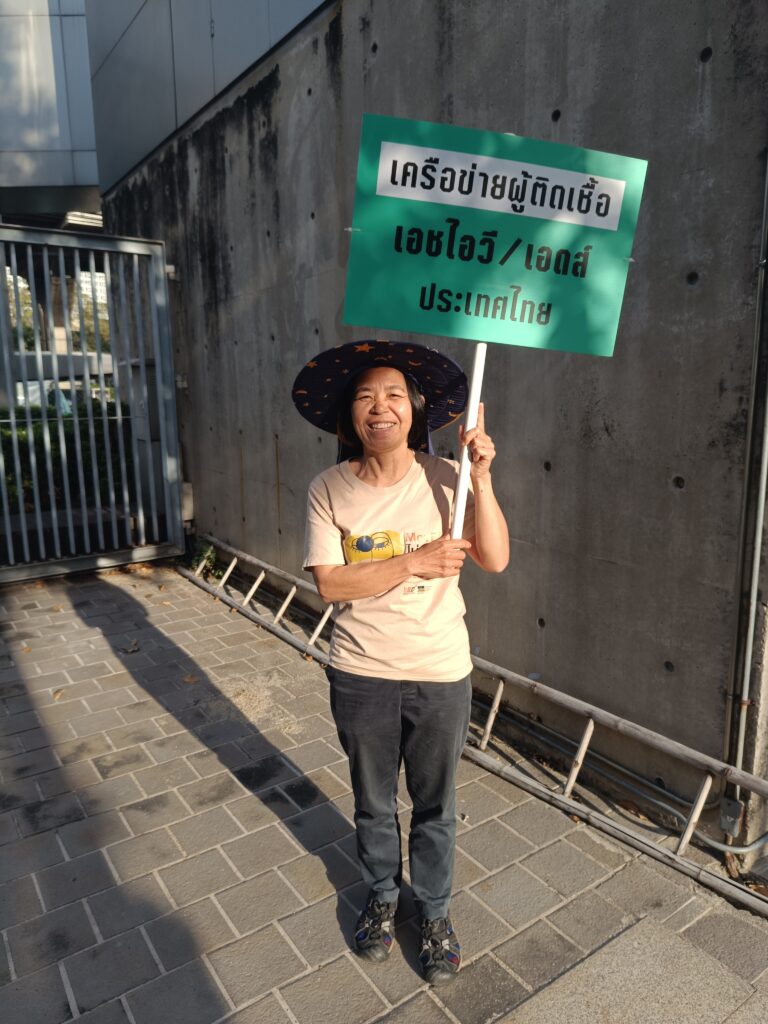
The organization called on the Thai Department of Intellectual Property to reject the patent application, prevent evergreening practices that extend unjustified monopolies, and ensure that the patent system prioritizes public health and access to medicines. “Thailand has already shown that challenging unmerited patents can expand access to life-saving medicines like bedaquiline. We must not allow new patent claims on combinations to reintroduce barriers and limit access to improved TB treatment regimens,” said Yupha Sukreung, Chairperson of the Thai Network of People Living with HIV/AIDS.