
เมื่อวันที่ 11 สิงหาคม 2569 เครือข่ายผู้ติดเชื้อเอชไอวี/เอดส์ ประเทศไทย (เครือข่ายฯ) ยื่นข้อมูลต่อกรมทรัพย์สินทางปัญญา กระทรวงพาณิชย์ เพื่อคัดค้านคำขอรับสิทธิบัตรเลขที่ 1901006941 ของบริษัท เมิร์ค ชาร์ป แอนด์ โดห์ม แอลแอลซี ซึ่งเป็นคำขอรับสิทธิบัตรเกี่ยวกับสูตรตำรับที่มีความคงตัวของแอนติบอดีต้าน PD-1 ที่เกี่ยวข้องกับ “ยาเพมโบรลิซูแมบ” (Pembrolizumab) ซึ่งเป็นยาสำคัญที่ใช้รักษาโรคมะเร็งหลายชนิด เนื่องจากเห็นว่าคำขอรับสิทธิบัตรดังกล่าว ไม่มีคุณสมบัติครบถ้วนตามหลักเกณฑ์ที่กำหนดไว้ใน พ.ร.บ.สิทธิบัตรฯ โดยเฉพาะการมีขั้นการประดิษฐ์ที่สูงขึ้น นอกจากนี้ยังมีข้อกังวลเกี่ยวกับความชัดเจนและขอบเขตของข้อถือสิทธิบางข้อ โดยเฉพาะข้อที่เกี่ยวข้องกับวิธีการรักษาโรค ซึ่งเป็นสิ่งที่ไม่ได้รับความคุ้มครองตามกฎหมายของไทย
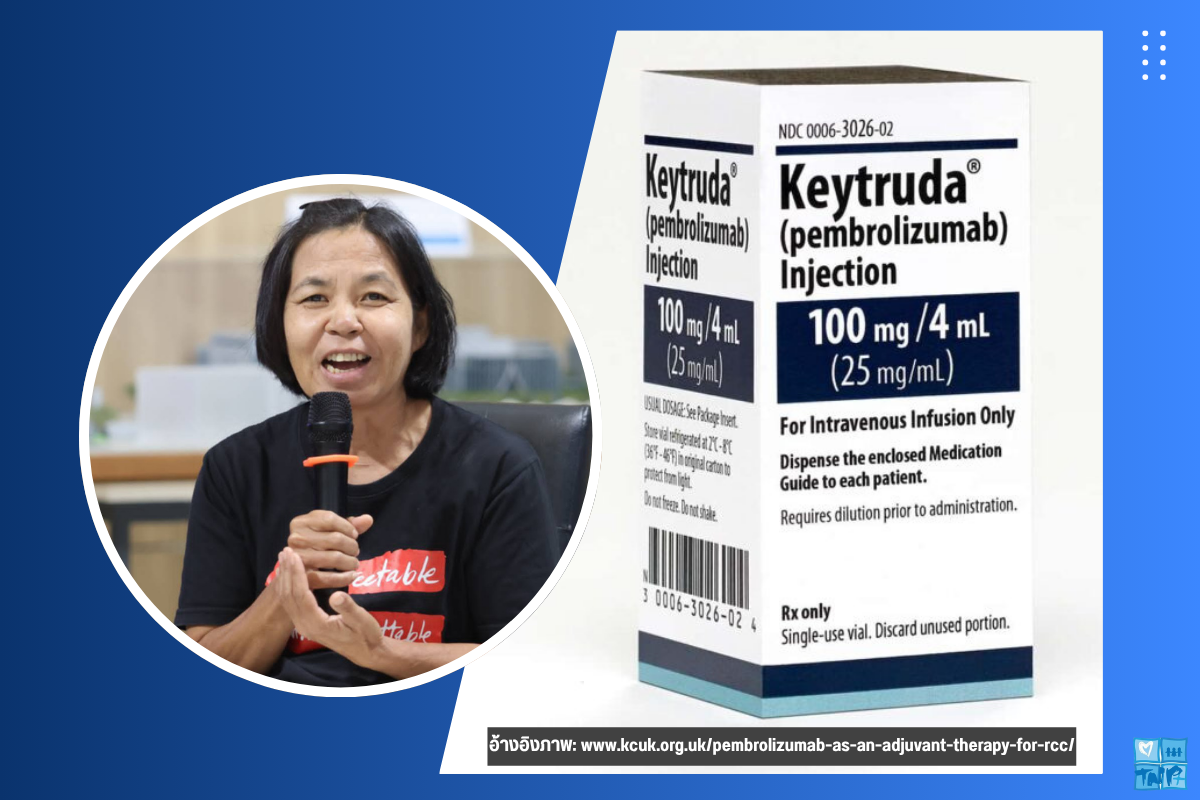
ยาเพมโบรลิซูแมบ (pembrolizumab) เป็นที่รู้จักในชื่อการค้าว่า คีย์ทรูด้า (Keytruda) เป็นยาภูมิคุ้มกันบำบัด (immunotherapy) ที่ใช้รักษามะเร็งหลายชนิด เช่น มะเร็งปอด มะเร็งเต้านม มะเร็งกระเพาะอาหาร และมะเร็งปากมดลูก ที่สำคัญแนวทางการรักษามะเร็งปากมดลูกของไทยได้ระบุให้ยาเพมโบรลิซูแมบเป็นหนึ่งในทางเลือกสำหรับการรักษาผู้ป่วยมะเร็งปากมดลูกระยะลุกลามบางกลุ่ม โดยเฉพาะผู้ป่วยที่ตรวจพบโปรตีน PD-L1 ในเซลล์มะเร็ง ซึ่งเป็นตัวบ่งชี้ว่าผู้ป่วยอาจเหมาะกับการรักษาด้วยยานี้
ทั้งนี้ในคำขอรับสิทธิบัตรดังกล่าวนั้น ไม่ได้เป็นการขอรับสิทธิบัตรตัวยาเพมโบรลิซูแมบในฐานะยาใหม่โดยตรง แต่เป็นการขอความคุ้มครองสูตรตำรับที่นำแอนติบอดีต้าน PD-1 ซึ่งรวมถึงยาเพมโบรลิซูแมบ มาผสมกับสารต่าง ๆ เพื่อช่วยให้ยามีความคงตัว รวมถึงการนำสูตรตำรับดังกล่าวไปใช้รักษาโรคมะเร็ง
เครือข่ายฯ เห็นว่าองค์ประกอบสำคัญของสูตรตำรับที่ขอรับสิทธิบัตรดังกล่าวเป็นสิ่งที่มีการเปิดเผยและเป็นที่รู้กันอยู่แล้ว โดยมีสิทธิบัตรที่เผยแพร่ตั้งแต่ปี 2557 ซึ่งเปิดเผยแนวทางที่คล้ายกันในการทำให้แอนติบอดีต้าน PD-1 มีความคงตัว ขณะที่งานวิจัยทางวิทยาศาสตร์ก่อนหน้านั้นก็ได้อธิบายถึงการใช้สาร L-methionine เพื่อช่วยป้องกันการเสื่อมสภาพของแอนติบอดีไว้แล้ว ดังนั้น เครือข่ายฯ จึงเห็นว่าการนำองค์ความรู้ที่มีอยู่แล้วมารวมกัน ไม่มีขั้นการประดิษฐ์ที่สูงขึ้นเพียงพอที่จะได้รับสิทธิบัตรและสิทธิผูกขาดเพิ่มเติม
สำหรับประเทศไทยได้ขยายบริการตรวจคัดกรองมะเร็งปากมดลูกอย่างต่อเนื่อง โดยเฉพาะการตรวจ HPV DNA ข้อมูลจากสำนักงานหลักประกันสุขภาพแห่งชาติ (สปสช.) ระบุว่า ตั้งแต่ปี 2566 สปสช. ได้สนับสนุนบริการ HPV Self-Sampling หรือการเก็บตัวอย่างด้วยตนเอง เพื่อเพิ่มทางเลือกและช่วยให้ผู้หญิงที่อาจรู้สึกเขินอายหรือไม่สะดวกเข้ารับการตรวจแบบเดิมสามารถเข้าถึงการตรวจคัดกรองได้มากขึ้น โดยในปีงบประมาณ 2568 มีผู้หญิงเข้ารับการตรวจคัดกรองมะเร็งปากมดลูกด้วยวิธี HPV DNA มากกว่า 1.2 ล้านคน และในกลุ่มผู้ที่ได้รับการตรวจด้วยวิธีดังกล่าว พบผู้ที่มีผลตรวจผิดปกติหรือติดเชื้อ HPV สายพันธุ์ความเสี่ยงสูงมากกว่า 120,000 คน
เครือข่ายฯ เห็นว่ายิ่งการตรวจคัดกรองมีความก้าวหน้า ก็ยิ่งทำให้การเข้าถึงการวินิจฉัยและการรักษาอย่างทันท่วงทีมากขึ้น โดยเฉพาะในผู้หญิงที่อยู่ร่วมกับเอชไอวี ซึ่งมีความเสี่ยงต่อการติดเชื้อ HPV เรื้อรังและการพัฒนาไปเป็นมะเร็งปากมดลูกสูงกว่าหญิงที่ไม่มีเชื้อ
อย่างไรก็ตาม แม้แนวทางการรักษามะเร็งปากมดลูกของประเทศไทย ระบุให้ยาเพมโบรลิซูแมบเป็นทางเลือกในการรักษาผู้ป่วยมะเร็งปากมดลูกระยะลุกลามบางกลุ่ม แต่ยาดังกล่าวมีราคาสูง และปัจจุบันยังไม่ได้อยู่ในบัญชียาหลักแห่งชาติและสิทธิประโยชน์ภายใต้ระบบหลักประกันสุขภาพแห่งชาติ

ยุพา สุขเรือง ประธานเครือข่ายผู้ติดเชื้อเอชไอวี/เอดส์ ประเทศไทย กล่าวว่า เครือข่ายฯ ได้ผลักดันมาอย่างต่อเนื่องให้ผู้หญิงที่อยู่ร่วมกับเอชไอวีสามารถเข้าถึงการตรวจคัดกรองเชื้อ HPV เพราะการตรวจพบความผิดปกติตั้งแต่เนิ่น ๆ ช่วยป้องกันการป่วยและเสียชีวิตจากมะเร็งปากมดลูกได้ ปัจจุบัน การตรวจคัดกรองสามารถเข้าถึงได้โดยไม่เสียค่าใช้จ่ายภายใต้ระบบหลักประกันสุขภาพแห่งชาติ แต่การตรวจคัดกรองเป็นเพียงจุดเริ่มต้น หากตรวจพบว่าเป็นมะเร็ง ผู้ป่วยก็ต้องสามารถเข้าถึงการรักษาที่จำเป็นได้ด้วย การป้องกัน การตรวจคัดกรอง การวินิจฉัย และการรักษา ต้องเชื่อมต่อกันเป็นระบบ โดยไม่ควรมีใครเข้าไม่ถึงการรักษาเพียงเพราะไม่มีเงินจ่าย
เฉลิมศักดิ์ กิตติตระกูล ผู้จัดการฝ่ายการเข้าถึงยา เครือข่ายผู้ติดเชื้อเอชไอวี/เอดส์ ประเทศไทย กล่าวว่า เรื่องนี้เป็นทั้งเรื่องคุณภาพของสิทธิบัตรและความเป็นธรรมในการเข้าถึงยา การให้สิทธิบัตรเพิ่มเติมแก่การปรับเปลี่ยนหรือนำเทคโนโลยีที่เป็นที่รู้กันอยู่แล้วมารวมกัน โดยไม่ได้ก่อให้เกิดการประดิษฐ์ใหม่อย่างแท้จริง จะทำให้การผูกขาดยืดออกไป ชะลอการแข่งขัน และทำให้ผู้ป่วยเข้าถึงยาทางเลือกที่มีราคาถูกกว่าได้ช้าลง การคัดค้านสิทธิบัตรเป็นกลไกหนึ่งในการคุ้มครองประโยชน์ด้านสาธารณสุข เพื่อให้มั่นใจว่าการเข้าถึงยาจะต้องไม่ถูกกีดขวางด้วยสิทธิบัตรที่ไม่ชอบธรรม
“เครือข่ายฯ จึงเรียกร้องให้กรมทรัพย์สินทางปัญญา พิจารณาตรวจสอบคำขอรับสิทธิบัตรดังกล่าวอย่างรอบคอบ เพื่อให้มั่นใจว่าสิทธิบัตรจะได้รับการคุ้มครองเฉพาะการประดิษฐ์ที่สมควรได้รับสิทธิตามกฎหมายอย่างแท้จริงเท่านั้น” เฉลิมศักดิ์กล่าว
อ้างอิงที่มาภาพยา: https://www.kcuk.org.uk/pembrolizumab-as-an-adjuvant-therapy-for-rcc/
TNP+ Challenges Pembrolizumab Patent Over Access Concerns.
Bangkok, 13 August 2026: The Thai Network of People Living with HIV/AIDS (TNP+) submitted evidence to the Department of Intellectual Property (DIP) on 11 August 2026 challenging patent application No. 1901006941, filed by Merck Sharp & Dohme LLC, concerning a stable formulation of an anti-PD-1 antibody, including pembrolizumab, an important medicine used to treat several types of cancer.
TNP+ argues that the application does not meet key requirements under Thailand’s Patent Act, particularly the requirement for an inventive step. It also raises concerns about the clarity and scope of some claims and argues that certain claims relate to methods of medical treatment that are excluded from patent protection under Thai law.
The application does not claim pembrolizumab itself as a new medicine. Instead, it seeks protection for formulations combining an anti-PD-1 antibody, including pembrolizumab, with ingredients that help keep the medicine stable, as well as certain uses of those formulations for treating diseases, including cancer.
TNP+ argues that important elements of these formulations were already known. A patent published in 2014 had disclosed similar approaches to keeping anti-PD-1 antibodies stable, while scientific studies had already described the use of L-methionine to protect antibodies from degradation. TNP+ therefore argues that combining these known approaches lacks the inventive step required to justify another patent monopoly.
Pembrolizumab, widely known by the brand name Keytruda, is an immunotherapy used to treat several cancers, including lung, breast, gastric and cervical cancers. Importantly, Thailand’s national cervical cancer treatment guideline includes pembrolizumab as a treatment option for certain patients with advanced cervical cancer, particularly where the tumour is PD-L1 positive.
Thailand has continued to expand cervical cancer screening services, particularly HPV DNA testing. According to the National Health Security Office (NHSO), since 2023, the NHSO has also supported HPV self-sampling, allowing women to collect samples themselves. This provides an additional option for women who may feel uncomfortable or find it inconvenient to undergo conventional screening, helping to increase access to cervical cancer screening. In fiscal year 2025, more than 1.2 million women received cervical cancer screening using HPV DNA testing, and among them, more than 120,000 had abnormal results or tested positive for high-risk HPV.
For TNP+, this progress in screening makes access to timely diagnosis and treatment even more important, particularly for women living with HIV, who are at higher risk of persistent HPV infection and of developing cervical cancer.
Although Thailand’s national clinical guideline recognizes pembrolizumab as a treatment option for certain patients with advanced cervical cancer, the medicine is expensive and is not currently included in Thailand’s National List of Essential Medicines (NLEM) for routine access under the Universal Coverage Scheme.
Yupha Sukrueng, Chairperson of the Thai Network of People Living with HIV/AIDS (TNP+), said:
“TNP+ has continuously advocated for women living with HIV to have access to HPV screening, because early detection can help prevent illness and deaths from cervical cancer. Today, HPV screening is available free of charge under the Universal Coverage Scheme, but screening is only the first step. If cancer is detected, patients must also be able to access the treatment they need. Prevention, screening, diagnosis and treatment must form one continuous system, and no one should be denied treatment simply because they cannot afford it.”
Chalermsak Kittitrakul, Access to Medicines Manager of TNP+, said:
“This is about both patent quality and equity in access to medicines. Granting additional patents for modifications or combinations of technologies that are already known, without a genuine inventive contribution, can extend monopoly protection, delay competition and delay access to more affordable alternatives. Patent opposition is an important public health safeguard to ensure that access to medicines is not blocked by unmerited patents.”
TNP+ calls on the Department of Intellectual Property to carefully examine the application and ensure that patent protection is granted only when it is genuinely deserved.
Photo Credit: https://www.kcuk.org.uk/pembrolizumab-as-an-adjuvant-therapy-for-rcc/